
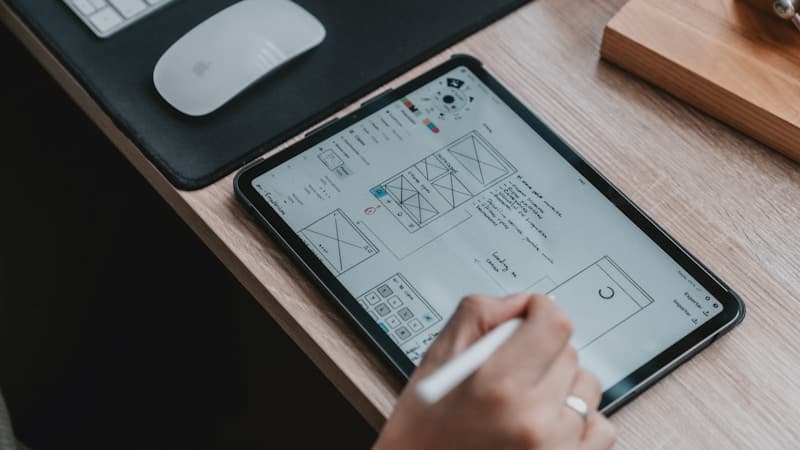
Forget expensive ad campaigns and flashy marketing gimmicks. The most powerful marketing tool you have is sitting right in front of your users every day: your product's user experience. Great UI/UX design doesn't just make things look pretty – it drives conversions, builds loyalty, and turns users into your biggest advocates.
The Hidden Marketing Power of UX
UX is Your Silent Salesperson
Every interaction a user has with your product is a sales conversation. Great UX design:
- Builds trust immediately
- Communicates value clearly
- Removes barriers to conversion
- Creates positive emotional connections
- Guides users toward desired actions
The Compound Effect
Unlike traditional marketing that requires constant investment, good UX design works 24/7:
- Reduces Customer Acquisition Cost: Users convert at higher rates
- Increases Customer Lifetime Value: Better experiences lead to longer retention
- Drives Word-of-Mouth: Happy users become advocates
- Lowers Support Costs: Intuitive design reduces confusion and questions
How UX Design Markets Your Product
1. First Impressions Create Instant Trust
Users form opinions about your credibility within 50 milliseconds of landing on your site. Great design immediately communicates:
- Professionalism: Clean, modern design suggests quality
- Reliability: Consistent patterns build confidence
- Attention to Detail: Polish indicates care and quality
- User Focus: Intuitive design shows you understand their needs
Case Study: Airbnb's redesign focused on trust-building through better photography, clearer information, and social proof. Result: 30% increase in bookings.
2. Friction Reduction = Conversion Optimization
Every unnecessary click, confusing label, or slow-loading page is a conversion killer. Great UX removes friction by:
- Simplifying Navigation: Users find what they need quickly
- Streamlining Forms: Fewer fields, smarter defaults
- Optimizing Load Times: Fast experiences keep users engaged
- Clarifying CTAs: Users know exactly what to do next
Example: Checkout optimization can increase conversion rates by 35% just by removing unnecessary steps.
3. Emotional Design Drives Decision-Making
People make decisions emotionally and justify them rationally. UX design influences emotions through:
- Visual Hierarchy: Guides attention to important elements
- Color Psychology: Different colors evoke different feelings
- Micro-interactions: Delightful details create positive associations
- Personalization: Relevant experiences feel more valuable
4. Social Proof Integration
Great UX seamlessly incorporates social proof elements:
- Testimonials: Prominently displayed at decision points
- Usage Statistics: "Join 50,000+ satisfied customers"
- Real-time Activity: "3 people viewing this item"
- Reviews and Ratings: Authentic feedback from real users
The Business Impact of UX-Driven Marketing
Measurable Results
Companies investing in UX see dramatic business improvements:
- ROI: Every £1 spent on UX returns £10-100
- Conversion Rates: Good UX can improve conversions by 200%
- Customer Satisfaction: Well-designed products score 30% higher
- Brand Loyalty: Users are 5x more likely to repurchase
Competitive Advantage
In commodity markets, UX becomes the differentiator:
- Apple vs. PC: Similar technology, different experience
- Uber vs. Taxis: Same service, better interface
- Tesla vs. Traditional Cars: Technology meets design thinking
UX Design Principles That Market for You
1. Clarity Over Cleverness
Good Marketing UX:
- Uses familiar patterns users already understand
- Has clear, descriptive labels and buttons
- Provides obvious paths to key actions
- Eliminates confusion and ambiguity
Example: Dropbox's homepage immediately shows what the product does with a simple headline: "Your stuff, anywhere." No confusion, no clever metaphors.
2. Progressive Disclosure
Reveal information gradually to avoid overwhelming users:
- Start Simple: Show core value proposition first
- Add Details: Provide more information as users show interest
- Context-Sensitive Help: Offer assistance when and where needed
- Layered Navigation: Organize complex information hierarchically
3. User-Centered Language
Your copy is part of your UX. Use language that:
- Focuses on Benefits: What's in it for the user?
- Speaks Their Language: Use terms they understand
- Creates Urgency Appropriately: Without being manipulative
- Reduces Anxiety: Address concerns proactively
4. Mobile-First Thinking
With mobile usage dominating, mobile UX IS your marketing:
- Touch-Friendly Design: Easy to use with thumbs
- Fast Loading: Mobile users are impatient
- Simplified Navigation: Limited screen space requires focus
- Thumb-Zone Optimization: Important actions within easy reach
Designing for Different Marketing Goals
Lead Generation UX
Goal: Capture contact information UX Strategy:
- Clear value proposition above the fold
- Minimal form fields with smart defaults
- Trust signals (security badges, testimonials)
- Multiple, contextual conversion opportunities
- Progressive profiling for longer forms
E-commerce Conversion UX
Goal: Drive purchases UX Strategy:
- High-quality product imagery with zoom
- Clear pricing and shipping information
- Simple, secure checkout process
- Guest checkout options
- Cart abandonment recovery prompts
SaaS Trial Conversion UX
Goal: Convert trial users to paid customers UX Strategy:
- Quick onboarding with immediate value
- Progress indicators and achievements
- Feature discovery through guided tours
- Usage analytics and upgrade prompts
- Clear upgrade paths with benefits
Content Marketing UX
Goal: Build authority and capture leads UX Strategy:
- Scannable content with clear hierarchy
- Related content recommendations
- Social sharing buttons
- Email subscription forms
- Downloadable resources as lead magnets
Common UX Marketing Mistakes
1. Overwhelming Users with Options
Problem: Too many choices paralyze users Solution: Use progressive disclosure and prioritize key actions
2. Ignoring Loading Performance
Problem: Slow sites kill conversions Solution: Optimize for speed, show loading states, prioritize above-the-fold content
3. Designing for Yourself, Not Users
Problem: What makes sense to you might confuse users Solution: Conduct user testing, gather feedback, iterate based on data
4. Inconsistent Experiences
Problem: Different pages feel like different companies Solution: Develop and maintain design systems and style guides
5. Forgetting About Accessibility
Problem: Excluding users with disabilities Solution: Follow WCAG guidelines, test with assistive technologies
Measuring UX Marketing Success
Key Metrics to Track
Micro-Conversions:
- Email signups
- Account registrations
- Content downloads
- Video views
- Feature usage
Macro-Conversions:
- Sales/purchases
- Subscription upgrades
- Demo requests
- Contact form submissions
Behavioral Metrics:
- Time on site/page
- Pages per session
- Bounce rate
- Click-through rates
- Task completion rates
Business Metrics:
- Customer acquisition cost
- Customer lifetime value
- Net Promoter Score
- Support ticket volume
A/B Testing for UX Marketing
Test different approaches to find what works:
- Headlines: Different value propositions
- CTAs: Various button colors, text, placement
- Forms: Number of fields, layout, labels
- Navigation: Different menu structures
- Content: Long vs. short copy, features vs. benefits
Building a UX-Marketing Culture
Cross-Team Collaboration
Break down silos between teams:
- UX + Marketing: Align on user journey and messaging
- UX + Sales: Understand objections and pain points
- UX + Customer Service: Learn from user problems
- UX + Development: Ensure feasible, performant solutions
User Research Integration
Make user insights central to marketing decisions:
- User Interviews: Understand motivations and barriers
- Usability Testing: Identify friction points
- Analytics Reviews: Data-driven design decisions
- Customer Feedback: Continuous improvement insights
The Future of UX Marketing
Emerging Trends
- Voice Interfaces: Designing for voice interactions
- AR/VR Experiences: Immersive product demonstrations
- AI Personalization: Dynamic, individualized experiences
- Micro-Interactions: Delightful details that surprise and delight
- Inclusive Design: Accessible experiences for all users
Technology Integration
- Chatbots: Conversational user interfaces
- Machine Learning: Predictive user experiences
- Real-time Personalization: Content that adapts to user behavior
- Progressive Web Apps: App-like experiences on the web
Getting Started: Your UX Marketing Audit
Quick Assessment Questions:
- Can users understand your value proposition in 5 seconds?
- Is your primary CTA obvious and compelling?
- Does your site load in under 3 seconds?
- Can users complete key tasks in 3 clicks or less?
- Does your design build trust and credibility?
- Is your experience consistent across all touchpoints?
- Are you measuring and optimizing based on user behavior?
Action Steps:
- Audit Current Experience: Identify friction points
- Define User Journey: Map the path to conversion
- Prioritize Improvements: Focus on high-impact changes
- Test and Iterate: Continuous improvement based on data
- Measure Results: Track both UX and business metrics
Conclusion
Great UI/UX design isn't just about making things look good – it's about creating experiences that market your product more effectively than any ad campaign ever could. When users love using your product, they become your best marketers.
Every interaction is an opportunity to build trust, communicate value, and guide users toward desired actions. By thinking of UX as your primary marketing tool, you'll create experiences that not only convert better but also build lasting relationships with your users.
The best part? Unlike traditional marketing campaigns that require ongoing investment, great UX design keeps working for you 24/7, turning every user interaction into a marketing opportunity.
Ready to make your UX your best marketing tool? At Kode by Kraft, we specialize in creating user experiences that convert visitors into customers and customers into advocates. Let's design an experience that markets itself.
Share this article